
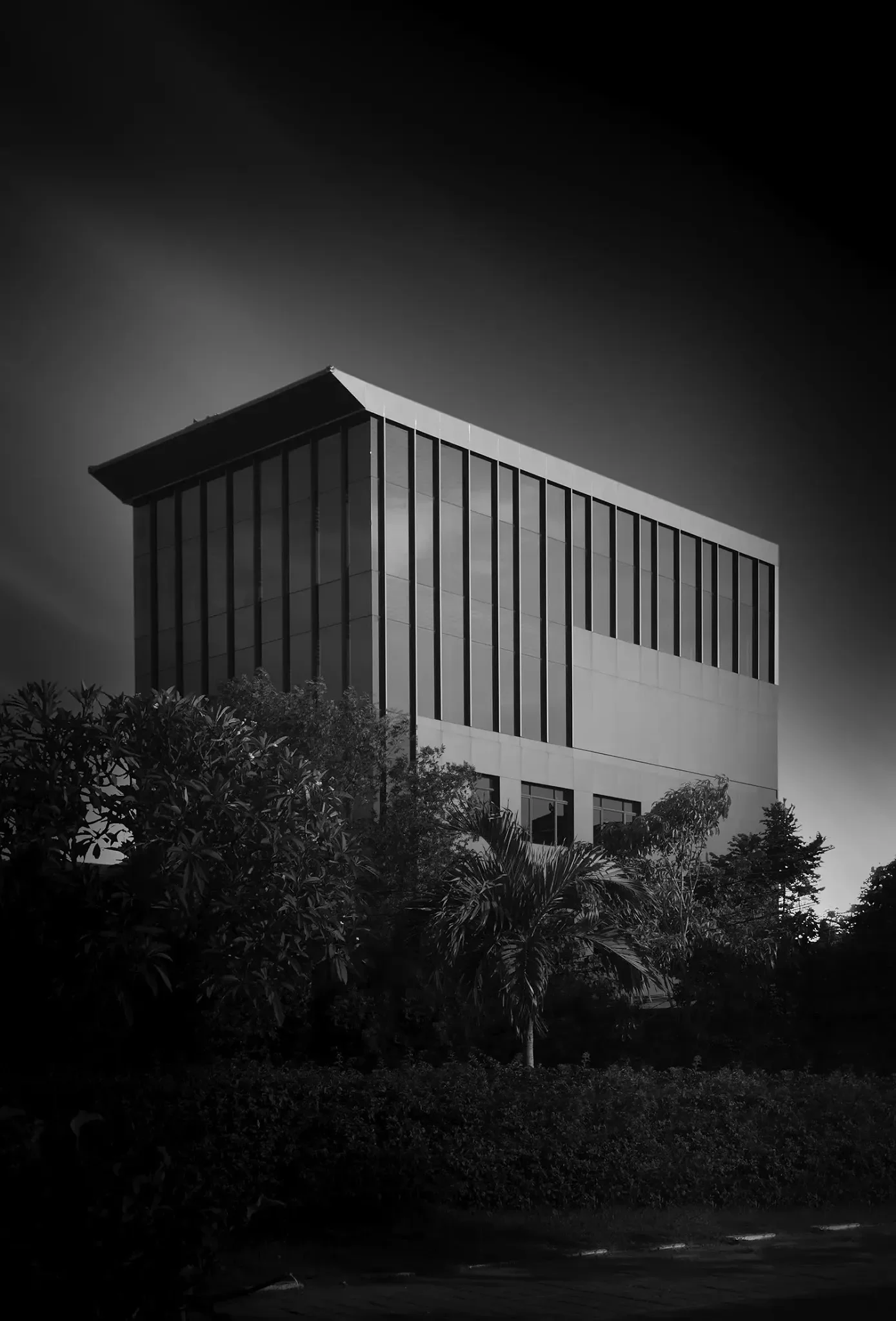
Chiaroscuro photography adapts the high-contrast lighting principles of Renaissance and Baroque painting masters (such as Caravaggio and Rembrandt) to contemporary digital mediums. Unlike standard lighting setups that focus on high dynamic range or ambient fill, chiaroscuro intentionally prioritizes deep shadows to sculpt form, mask distracting structural clutter, and direct the viewer’s psychological focus onto a sharply illuminated highlight. In architectural and fine art object contexts, this style is executed by using single directional light sources, utilizing specialized high-density neutral density (ND) filters to stretch ambient sky elements into smooth tonal gradients, and optimizing post-processing tone curves to completely drop low-frequency background details into pure, velvet blacks.
Introduction: The Architecture of Absolute Shadow
In the contemporary digital landscape, photography is largely dominated by an obsession with absolute visibility. Modern image sensors boast high dynamic ranges designed to recover every detail hidden in the darkest shadows and pull back information from blown-out highlights. Computational photography algorithms seamlessly compile multi-exposure brackets to deliver bright, perfectly flat, and highly uniform scenes. Yet, in this relentless pursuit of digital perfection and complete informational clarity, a profound artistic quality is often lost: the evocative power of the unseen.
Fine art photography, particularly when focused on classical architecture and sacred structural objects, demands a language that transcends mere documentary recording. It requires a methodology that injects atmosphere, emotional weight, and structural three-dimensionality into a flat two-dimensional plane. This is where the ancient aesthetic of chiaroscuro reasserts its dominance. By rejecting the mandate of total illumination, the fine art photographer uses shadow not as an accidental absence of light, but as a deliberate, structural tool to carve beauty out of the dark.
The Historical Evolution: From Baroque Canvas to Silver Halide
To fully command chiaroscuro in contemporary photography, one must first comprehend its origin as an architectural and painterly device. The term itself blends the Italian roots chiaro (clear or light) and scuro (obscure or dark). While initial developments in tonal modeling began during the late Middle Ages, it was during the High Renaissance and the subsequent Baroque era that the technique transformed into a revolutionary visual philosophy.
The Masters of Tenebrism
Leonardo da Vinci pioneered a delicate, smoky application of tonal shift known as sfumato, which allowed forms to blend imperceptibly into surrounding darkness. However, it was Michelangelo Merisi da Caravaggio who broke away from subtle transitions, introducing a radical variant known as tenebrism. Caravaggio positioned his human and architectural subjects under harsh, uncompromising directional beams of light, plunging the remainder of the frame into absolute, unyielding blackness. This extreme contrast heightened the emotional tension, turning domestic spaces into highly dramatic stages.
In northern Europe, Rembrandt van Rijn adapted this philosophy into a more luminous, atmospheric framework. Rather than employing Caravaggio’s sharp transitions, Rembrandt used a complex play of reflected light within deep shadow zones, ensuring that dark regions retained a subtle, transparent warmth. This allowed textures—whether human skin, heavily woven tapestries, or cold stone masonry—to breathe even within deep shadow layers.
The Photographic Transition
When the chemical photographic process emerged in the 19th century, early pioneers instinctively looked to these classical traditions. The physical limitations of early orthochromatic emulsions naturally favored high-contrast compositions. Decades later, the fine art movement known as Pictorialism deliberately mimicked the painterly softness and deep values of Rembrandt. By the mid-20th century, the low-key lighting structures of German Expressionist cinema and American Film Noir adapted chiaroscuro principles to industrial cityscapes, turning rain-slicked concrete pavements, emergency stairwells, and structural brickwork into moody characters of their own.
The Core Elements of Fine Art Chiaroscuro
In modern fine art monochrome photography, chiaroscuro rests upon four foundational tenets that govern how a three-dimensional object is interpreted through a digital or analog medium. Mastering these components allows the photographer to shift their workflow from reactive capture to proactive artistic creation.
| Chiaroscuro Pillar | Technical Function | Artistic & Psychological Impact |
|---|---|---|
| Tonal Dominance | Shadow areas comprise 60% to 80% of the total frame geometry. | Establishes a moody, contemplative atmosphere; isolates the main subject from chaotic surroundings. |
| Directional Lighting | Employs single, highly directional lighting vectors with minimal ambient fill. | Simulates natural light breaking through storms or theatrical gallery spotlights. |
| Micro-Contrast Preservation | Retains extreme clarity and sharp edges within the highlighted zones. | Draws the eye directly to structural texturing, masonry joints, and smooth carvings. |
| Negative Space Simplification | Intentionally drops low-contrast background details into deep black zones. | Removes visual clutter, simplifying complex structural spaces into clean geometric silhouettes. |
Technical Execution: Camera Mechanics and Exposure Strategies
Executing a flawless chiaroscuro frame in architectural and object photography requires strict control over the camera’s light meter and sensor configuration. Because modern camera meters are calibrated to average an entire frame into an overall 18% middle grey value, traditional automatic exposure modes will fail catastrophically when presented with a low-key scene. The camera will interpret the intended dark background as an undexposure error and automatically overexpose the scene, blowing out the delicate details of your main highlight.
The Spot Metering Protocol
To bypass the camera’s automated miscalculations, the photographer must shift to a strictly manual exposure workflow using the following steps:
- Activate Spot Metering: Switch the camera’s internal metering mode from Evaluative/Matrix to Spot Metering. This constrains the meter’s reading area to a precise point, usually representing merely 1% to 3% of the central viewfinder space.
- Target the Primary Highlight: Place the spot metering circle directly onto the brightest, most critical structural element of the object—such as the sunlit stone facade of a tower or the highlighted cheekbone of a monumental statue.
- Expose for the Highlights: Adjust the shutter speed, lens aperture, and ISO value until the light meter registers that specific highlight point as perfectly exposed (typically at
0 EVor slightly pushed to+0.5 EVif preserving bright white tones). By locking this setting, the vast majority of ambient, mid-tone, and low-light regions in the frame will naturally plunge down the histogram into deep shadow. - Maintain Native ISO: To ensure that the deep shadow zones remain completely pristine and free from digital noise or chroma artifacts, lock the camera at its base native sensitivity (typically
ISO 64orISO 100). Raising the ISO will introduce unwanted digital grain into the dark areas, degrading the velvety quality of the final print.
The Fundamental Axiom of Fine Art Low-Key Photography: You must always expose for the highlights and let the shadows take care of themselves. In the digital darkroom, highlights that are allowed to clip to pure white lose all digital data permanently. Shadows, however, can be intentionally clipped or sculpted to form the structural foundation of your composition.
Architectural Adaptation: Merging the Classical and the Modern
Applying chiaroscuro to architectural forms presents unique structural challenges. Unlike a controlled studio portrait environment where the lighting can be manually adjusted, the architectural photographer must work in harmony with the rotation of the Earth and the changing dynamics of local weather patterns.
Sculpting Sacred Textures: The Classical Context
When capturing traditional, ornate structures—such as the intricately layered roofs of an Indonesian temple tower or the detailed brickwork of historical stone structures—the goal of chiaroscuro is to emphasize the intense texture and craftsmanship of the architecture. The ideal lighting condition is a harsh, low-angle sun breaking through a heavy storm sky. This natural phenomenon mimics a giant gallery spotlight, striking the upper tiers of the building while the surrounding environment remains under the heavy, dark canopy of clouds.
By positioning yourself at a 90-degree angle relative to the incoming sunlight, you create a split-lighting scenario. One side of the architectural carvings is brightly defined, while the recessed reliefs drop instantly into dark shadow. The extreme contrast brings forward the three-dimensional depth of the stone carvings, making the structure feel monumental and timeless.
Minimalist Geometry: The Modern Corporate Context
Conversely, when shooting modern glass and steel structures, the photographer treats the building as a massive, minimalist sculpture. Here, chiaroscuro shifts from highlighting intricate organic textures to celebrating pure geometric silhouettes and long, sweeping lines. The glass panels of modern skyscrapers act as massive mirrors, reflecting the sky and creating sharp, straight highlights that contrast sharply with the dark, unreflective concrete base of the building.
Advanced Technique: Integrating Long Exposure and Digital Drag
One of the most powerful modern enhancements to fine art architectural chiaroscuro is the integration of long exposure techniques using high-density Neutral Density (ND) filters, such as 10-stop or 15-stop variants. This approach introduces a beautiful contrast between the absolute stillness of the architecture and the continuous movement of nature.
By stretching an exposure over 60, 120, or 240 seconds, several artistic transformations occur simultaneously within the frame:
- Sky Smoothness: Jagged, chaotic cloud structures are completely blurred into long, elegant streaks of light and dark values. This creates a clean, uniform backdrop that isolates the sharp edges of the building.
- Water Simplification: Surrounding water surfaces lose all texture and micro-waves, turning into a perfectly flat, dark mirror that echoes the low-key values of the lower frame.
- Elimination of Transients: Moving people, vehicles, and distracting objects are completely erased from the scene, leaving the architecture standing in absolute solitude.
The Digital Darkroom: Fine Art Monochrome Processing Workflow
The creation of a fine art chiaroscuro masterpiece is only half-completed inside the camera body. The final look is fully realized during the digital darkroom post-processing phase, where raw sensor data is carefully shaped into a striking monochrome print.
1. High-Fidelity Monochrome Conversion
Avoid simply dropping the global saturation slider to zero. A professional monochrome conversion requires managing individual color channels to control how various tones translate into grey values. For instance, darkening the blue and cyan channels allows you to turn a deep blue sky into a dramatic, rich black backdrop, instantly separating the building from its environment without introducing harsh artifacts.
2. Strategic Tone Curve Manipulation
The tone curve is the most critical tool for controlling your contrast. To achieve a rich, velvety chiaroscuro appearance, the lower left quadrant of the curve (representing the shadows and deep blacks) is pulled down firmly, forcing low-frequency ambient details into a clean, solid dark zone. Concurrently, the highlights section is carefully adjusted to form a gentle S-curve, preserving delicate surface textures on the illuminated stone without letting them clip into pure white.
3. Digital Dodge and Burn Operations
Mirroring the classical darkroom workflows of legendary landscape masters, local adjustments are made using precise adjustment brushes and radial gradients. The photographer carefully “burns” (darkens) distracting peripheral details, such as bright patches of grass or nearby trees, forcing them down into the shadows. Meanwhile, the main architectural highlights are gently “dodged” (brightened) to guide the viewer’s eye effortlessly along the structural lines of the design.
Conclusion: The Timeless Power of the Low-Key Aesthetic
Chiaroscuro photography is far more than a simple visual trick or an editing preset; it is a profound artistic statement about balance, mystery, and compositional discipline. By choosing to let shadows dominate the frame, you strip away the unnecessary visual noise of the everyday world, leaving behind the pure, essential soul of your subject.
Whether you are capturing the spiritual majesty of a traditional temple tower or the clean, geometric lines of a modern corporate skyscraper, mastering the interplay of light and shadow elevates your images from simple snapshots into timeless, fine art masterpieces. Step out into the light, embrace the power of the dark, and let your shadows tell the story.